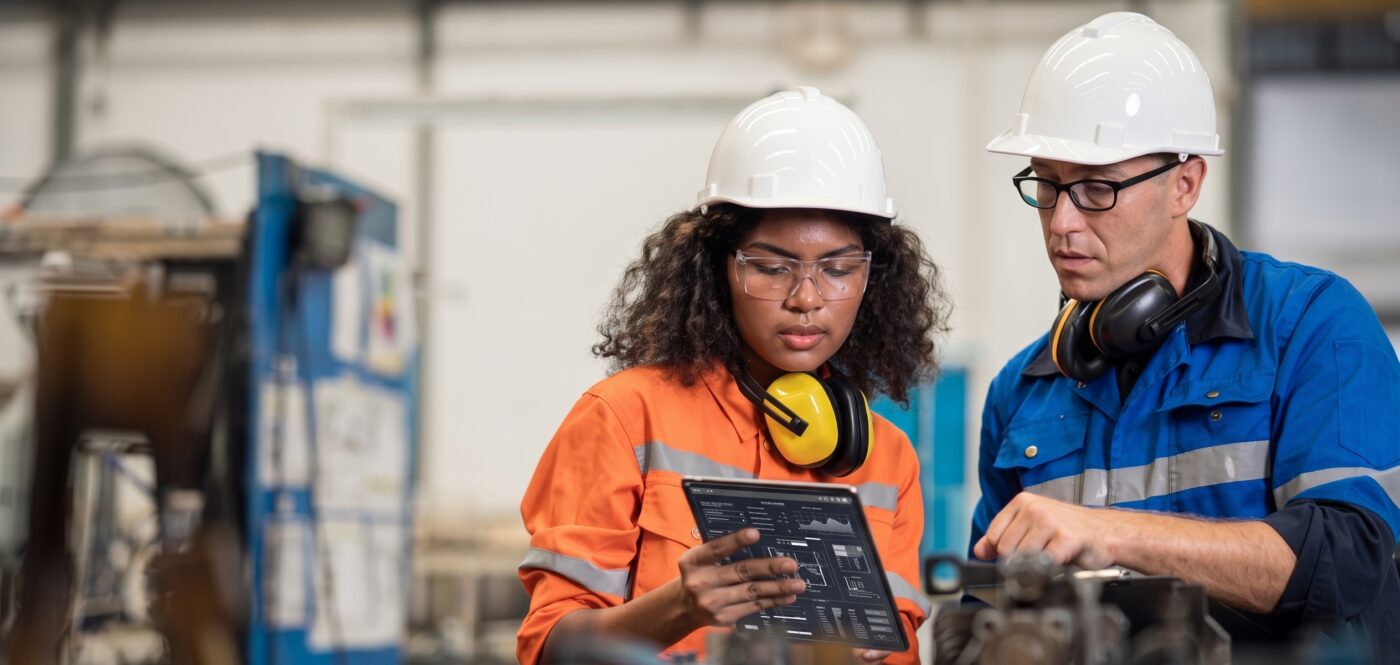
When most people hear artificial intelligence, they probably think about ChatGPT, automated emails, or AI-generated images. Those applications receive plenty of attention because people interact with them every day. However, AI in manufacturing is moving beyond office productivity and into everyday production operations. Some of the most useful applications are far more practical than futuristic.
This does not mean factories suddenly need robots replacing every employee. Manufacturers are using AI to analyze equipment data, assist inspections, find production patterns, and help employees access information. The technology is becoming another tool for solving problems manufacturers already understand. That distinction is important when deciding where AI actually belongs inside a business.
The National Institute of Standards and Technology’s 2026 roadmap for smart manufacturing identifies several areas where AI is advancing industrial operations. These include industrial data analysis, advanced sensing, digital twins, robotics, supply chains, and manufacturing quality. NIST also identifies data quality, legacy systems, workforce readiness, privacy, and cybersecurity as continuing implementation challenges.
What AI in Manufacturing Actually Looks Like
Practical AI in manufacturing starts with information the business already produces. Modern facilities generate data through production equipment, sensors, ERP platforms, inventory systems, quality systems, and maintenance records. AI can analyze that information much faster than employees could review it manually. The goal is finding useful patterns and giving employees better information for making decisions.
According to NIST’s research on artificial intelligence in U.S. manufacturing, manufacturers are already applying AI across several operational areas. These include predictive maintenance, quality control, demand forecasting, resource management, and production scheduling. NIST reports that 46% of surveyed manufacturers use AI tools in their operations. More than 80% expect their AI use to increase during the next two years.
The opportunity is not necessarily replacing an existing process with something completely new. Often, manufacturers already collect the information they need but struggle to use it effectively. AI can make existing operational data easier to analyze and act upon.
How AI in Manufacturing Supports Predictive Maintenance
Every manufacturer understands the cost of unexpected equipment downtime. A critical machine can fail in the middle of production and immediately affect schedules. Employees may then wait while technicians diagnose the problem, locate parts, and complete repairs. Customer deliveries can also be affected when production falls behind.
Predictive maintenance uses equipment data to identify signs that something may be changing before a failure occurs. Sensors can track information such as vibration, temperature, pressure, or operating behavior. AI models can then analyze those measurements for patterns that may indicate developing problems. NIST identifies predictive maintenance as one of the established applications of machine learning on modern production floors.
This does not mean AI in manufacturing can predict every equipment failure. Equipment still requires experienced technicians, regular inspections, and proper maintenance. However, better information can help maintenance teams investigate unusual conditions before they become larger problems. That can shift some maintenance work from reacting to failures toward planning interventions earlier.
This also supports a principle OSC has discussed before. Our guide to manufacturing cybersecurity risks and common technology mistakes explains why waiting for systems to break creates unnecessary operational risk. The same principle applies to production equipment. Preventing avoidable interruptions is usually more practical than recovering during an emergency.
How AI in Manufacturing Can Improve Quality Control
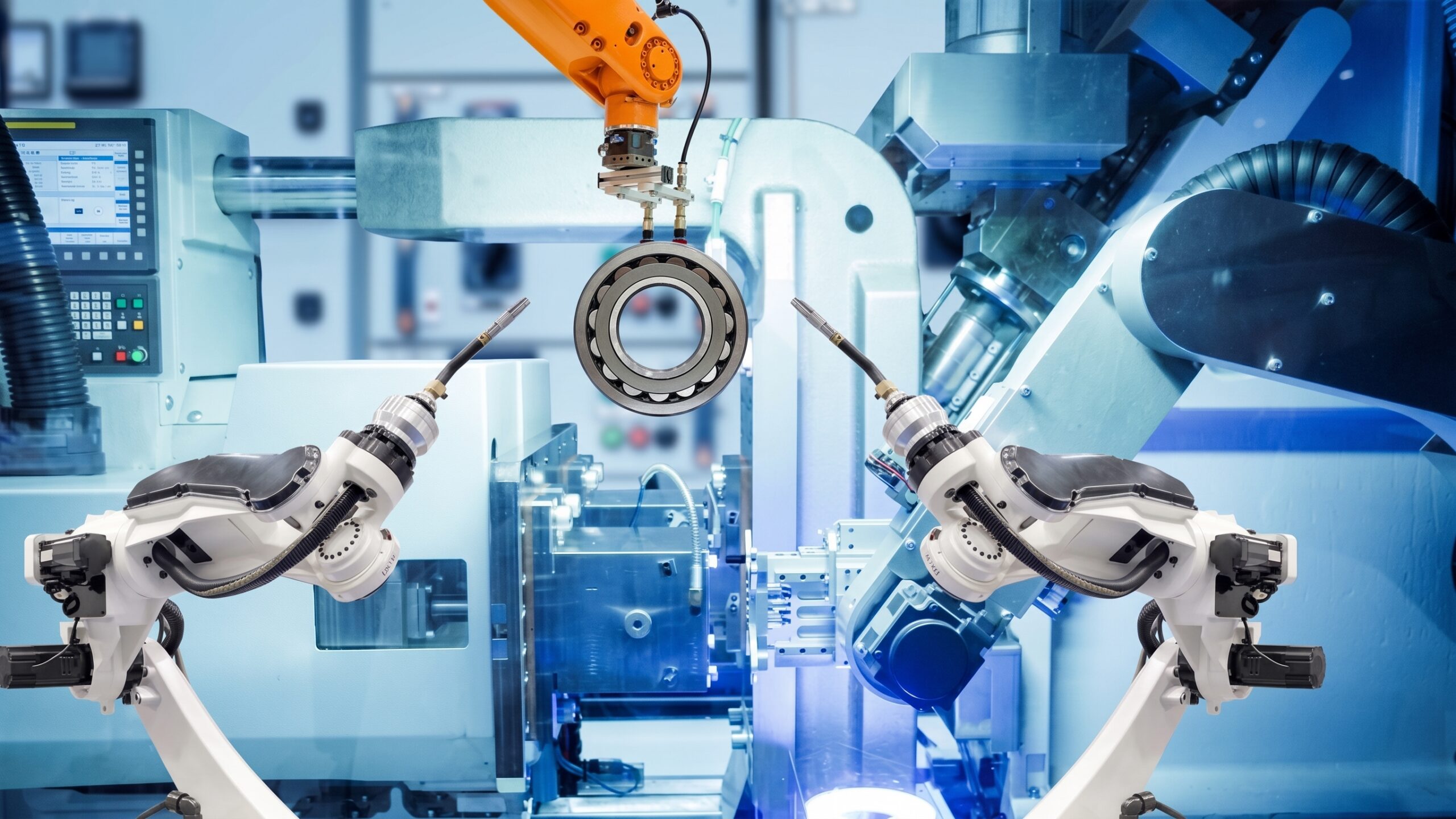
Quality control is another practical area for artificial intelligence. Manufacturers already use cameras and automated inspection equipment throughout many production environments. Adding machine learning can help these systems recognize defects, inconsistencies, or unusual product characteristics.
NIST describes AI-supported quality control as a method for detecting defects or anomalies through pattern recognition. This can help manufacturers inspect large quantities of products consistently. It can also provide another source of information for experienced quality employees.
The important point is that the technology does not eliminate the need for human judgment. A quality manager still determines acceptable standards, investigates problems, and decides what corrective action is necessary. AI-powered inspection can support that employee by continuously reviewing production output. Think of it as another set of eyes that does not get tired during a long production run.
Microsoft also identifies predictive maintenance and automated quality inspection as major industrial AI applications. Its manufacturing platform emphasizes using AI alongside frontline employees and existing production processes.
Manufacturers Already Have Valuable Data
Many manufacturing companies have spent years collecting information without necessarily thinking of it as an AI resource. ERP systems track orders, inventory, purchasing, and production activity. Equipment generates operating information, while quality systems track defects and inspection results. Maintenance departments may have years of repair records and service histories.
The challenge is connecting that information and finding useful relationships within it. AI in manufacturing can help identify patterns that might otherwise remain buried across thousands of records. Perhaps a machine produces more defects under certain operating conditions. Production could also consistently slow during one stage of a process.
The information needed to answer these questions may already exist. The real problem is that employees often lack enough time to manually analyze everything being collected. AI can help organize that information and point employees toward areas worth investigating.
| Manufacturing Challenge | How AI Can Assist | Practical Business Goal |
|---|---|---|
| Unexpected equipment problems | Analyze equipment and sensor data for unusual patterns | Reduce unplanned downtime |
| Product defects | Assist visual inspections and identify inconsistencies | Improve quality and consistency |
| Large amounts of production data | Find patterns across equipment, ERP, and operational records | Identify bottlenecks and inefficiencies |
| Loss of experienced employee knowledge | Organize documented procedures and troubleshooting information | Improve training and knowledge transfer |
However, manufacturers should understand where their data comes from before connecting systems together. Outside software providers, equipment vendors, and cloud platforms can expand the company’s technology footprint. Our article about third-party cyber risk and supply chain security explains why access between connected systems requires careful oversight.
Preserving Decades of Manufacturing Knowledge
One of the most interesting opportunities involves something manufacturers have worried about for years. Experienced employees eventually retire, change jobs, or move into different positions. When they leave, decades of practical knowledge can leave with them.
Imagine a maintenance employee who has worked with the same production equipment for 25 years. That person may recognize a strange vibration, sound, or operating pattern immediately. They may also know which components usually cause a specific problem. Much of that knowledge may never appear in an equipment manual.
Documenting that experience could eventually allow other employees to search it through an internal AI system. A technician could describe a problem and retrieve previous troubleshooting procedures, service notes, manuals, and documented experience. The employee still performs the diagnosis, but valuable historical knowledge becomes easier to access.
Recent Deloitte research on AI and the skilled manufacturing workforce examines this exact opportunity. Deloitte found that AI can embed guidance and expertise into daily workflows for technicians. This can support troubleshooting, maintenance, quality work, and the development of less-experienced employees.
For smaller manufacturers, this use of AI in manufacturing could become particularly valuable. These companies may depend heavily on a small number of experienced people. Capturing their knowledge creates continuity while helping newer employees develop their own expertise.
Is Your Manufacturing Technology Ready for AI?
AI works best when your data, systems, security, and infrastructure can support it. Onsite Computing can help identify technology gaps before new tools are introduced into your manufacturing environment.
Do Not Start With AI. Start With the Problem.
This may be the most important part of the entire conversation. Buying an AI product simply because everyone is talking about artificial intelligence is not a strategy. Manufacturers should first identify a specific operational problem that needs improvement.
Where is production losing time? Which equipment repeatedly causes problems? What information is difficult for employees to find? Which repetitive tasks consume hours without adding much value? Those questions create a much better starting point than asking what AI software the company should purchase.
Once the problem is clear, the business can determine whether artificial intelligence is actually appropriate. In some cases, the answer might be better automation, improved documentation, updated equipment, or employee training. Not every problem requires AI, and forcing it into the wrong process can create more complexity.
NIST identifies several barriers manufacturers must consider before implementing these technologies. They include poor data quality, integration with legacy systems, workforce skill gaps, initial costs, privacy concerns, and cybersecurity risks.
That last issue deserves attention. Connecting production data, cloud services, AI platforms, and outside vendors can create new security considerations. OSC previously outlined several manufacturing cybersecurity risks that can affect production environments. AI projects should improve operations without creating unnecessary exposure around critical production systems.
Where AI in Manufacturing Goes From Here
Artificial intelligence is not going to transform every manufacturing company overnight. The companies that benefit most probably will not chase every new platform. They will identify problems where technology can produce a measurable operational improvement.
That could mean detecting equipment problems earlier or giving quality teams better inspection information. It could mean finding patterns hidden within years of production data. It could also mean capturing valuable knowledge before an experienced employee retires.
The future of AI in manufacturing will likely be much more practical than dramatic. Successful manufacturers will combine technology with the experience their employees already have. They will also test new tools carefully before expanding them across the production floor.
For businesses exploring AI in manufacturing, the best place to start is with a real operational problem. From there, the right technology can support smarter decisions without adding unnecessary complexity. Onsite Computing can help manufacturers evaluate their current systems, identify technology gaps, and prepare their infrastructure for practical AI use. Contact Onsite Computing to discuss where AI may fit into your manufacturing environment.
Frequently Asked Questions About Manufacturing AI
Manufacturers can use artificial intelligence for predictive maintenance, quality inspection, production analysis, forecasting, and employee support. The appropriate use depends on the company’s equipment, data, processes, and operational goals.
AI can analyze sensor and historical maintenance data for patterns associated with equipment problems. It cannot guarantee that every failure will be predicted. Maintenance teams still need inspections, preventive maintenance, and experienced technical judgment.
AI-powered vision systems can assist inspectors by continuously reviewing products for defects or inconsistencies. Human employees still define quality requirements and investigate unusual findings. The technology works best as an additional inspection tool rather than a replacement for expertise.
Companies can document procedures, troubleshooting knowledge, manuals, and previous repair information within searchable knowledge systems. AI can make that information easier for newer employees to retrieve. This can improve continuity and reduce dependence on undocumented knowledge.
Manufacturers should begin by identifying a specific business or production problem. They should then evaluate available data, infrastructure, cybersecurity, employee readiness, and integration requirements. AI should be selected because it solves that problem, not simply because the technology is available.
